Last updated 2026-08-17
TL;DR
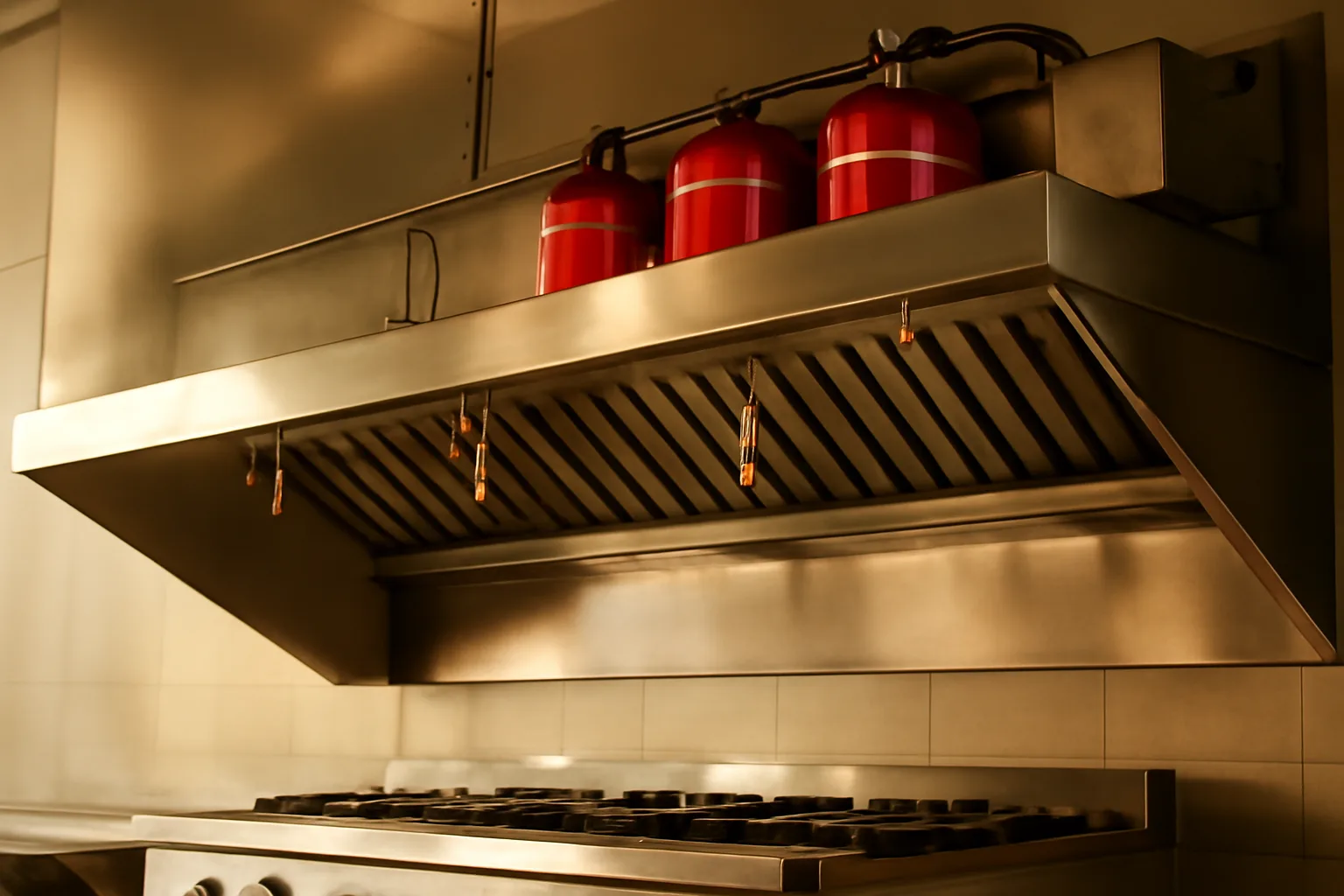
Starting a kitchen hood Ansul service in Alabama means getting a state fire suppression contractor license, completing manufacturer training on the specific suppression system (typically Ansul R-102 or similar), and pulling an AHJ permit for each job. Budget roughly $150, $500 for state fees, plus training costs. Confirm current fees and processing times with the Alabama State Fire Marshal's office before you file.
Do you need a license for kitchen hood Ansul in Alabama?
Yes. Alabama requires anyone who installs, services, or recharges fixed fire suppression systems, including commercial kitchen hood systems, to hold a license issued by the Alabama State Fire Marshal's office [1]. This isn't a gray area. Work without that credential and you're looking at stop-work orders, fines, and inspections that never pass.
The credential you need is a Fire Suppression Systems Contractor license. Under Alabama law (Alabama Code Title 34, Chapter 33), fire suppression work is regulated as a specialty trade [1]. There's a separate technician-level qualifier requirement too. The person actually doing the work on-site usually has to hold a qualifier card tied to the licensed contractor entity. Confirm the exact qualifier and contractor split with the Fire Marshal's office before you file, because Alabama has revised its tiered requirements over the years.
Beyond the state credential, every jurisdiction (city, county, or fire district) can layer on its own permit. Mobile, Birmingham, Huntsville, and Montgomery all run active AHJ permit desks. You pull a permit before each installation, and the AHJ inspector signs off after. That local step is separate from your state license. It never goes away, no matter how long you've been in business.
For a deeper look at the Alabama license itself, see the full breakdown at kitchen hood Ansul license in Alabama.
What training and certifications does Alabama actually require?
Alabama's fire suppression license requires documented training on the specific system you'll service. For kitchen hood work, that almost always means Ansul R-102 factory training or an equivalent wet chemical course from a manufacturer whose system is UL 300-listed [2]. The UL 300 standard, "Fire Testing of Fire Extinguishing Systems for Protection of Restaurant Cooking Areas," is the baseline both the National Fire Protection Association (NFPA) and local AHJs point to when they ask whether your system and your installer are qualified [3].
Ansul (now a Kidde brand under Carrier) runs its own authorized distributor and training network. You have to be factory-authorized to legally install and service R-102 or Piranha systems. That authorization comes from completing the manufacturer's hands-on course, passing the exam, and being tied to an authorized distributor. No shortcut exists. The AHJ will ask for your authorization documentation, and the form is specific.
Some Alabama localities also accept NICET (National Institute for Certification in Engineering Technologies) certification as supporting evidence of competency, though NICET alone doesn't replace the state license or the manufacturer authorization [4]. Treat NICET as a resume line that helps with bigger commercial bids, not as a licensing substitute.
Here's the order that matters: get the state contractor license first, complete manufacturer-specific training on the system you plan to service, then start pulling local permits. Skip a step and the paper doesn't line up.
How much does kitchen hood Ansul cost in Alabama?
Three cost buckets. Licensing and exam fees, training costs, and per-job permit fees. They don't blend together, so budget each one on its own.
Licensing fees. The Alabama State Fire Marshal's office sets the contractor license application fees. From publicly available fee schedules, fire suppression contractor fees have historically run roughly $150 to $300 for initial applications, with renewals in a similar band [1]. Confirm the current fee directly with the Fire Marshal's office before filing, because fees can change by rule without a legislative vote.
Training costs. Ansul/Kidde factory training is not free. Authorized distributor courses for R-102 installation and service typically run $300 to $800 per person depending on format, location, and travel. The manufacturer sets these prices and they move by region. Budget on the high side.
Per-job permit fees. This is the hardest number to pin down. AHJ permit fees in Alabama vary by jurisdiction. A small restaurant hood permit in a rural county might cost $50. A larger installation in Birmingham or Huntsville can run $150, $500 or more depending on scope and the local fee schedule. Call the specific fire marshal or building department for the city where the job sits before you quote the customer.
A practical first-year estimate for a solo operator: state license application, exam prep, and manufacturer training combined often lands at $1,000, $2,000 before you've pulled your first permit. That's a reasonable range, not a guarantee.
For a tool that organizes the AHJ and semi-annual route paperwork, AnsulPath sells a $199 one-time kit at /start. One option, not the only one.
The cost table below breaks these ranges into a structured view.
How long does kitchen hood Ansul take in Alabama?
Longer than most people expect, and it varies by piece.
The state license application processing time at the Alabama State Fire Marshal's office has historically run 4 to 12 weeks depending on application volume and whether your paperwork is complete on the first pass [1]. Incomplete applications, which are the norm on a first filing, reset that clock. Get every document right before you mail or upload.
Manufacturer training scheduling adds its own delay. Ansul factory courses don't run every week in every region. You may wait 4 to 8 weeks for the next available session, especially in a rural part of Alabama far from a major distributor. Some distributors offer regional courses in Birmingham or Mobile now and then. Ask your nearest authorized Ansul distributor for the next scheduled date.
Local AHJ permits move faster, often 1 to 3 business days for straightforward restaurant hood jobs once you're licensed and your application is complete. Smaller jurisdictions can take longer. A few larger cities run online permit portals that speed things up.
Realistic total from "I want to do this" to "I'm licensed and pulling my first permit": 3 to 5 months, assuming no major snags. Plan for that before you quote any installation dates to a customer.
If you're comparing Alabama's process to a neighbor, see how to start kitchen hood Ansul in Arkansas for a sense of how state timelines differ.
What NFPA codes govern kitchen hood Ansul work in Alabama?
Alabama adopts the International Fire Code and references NFPA standards as part of its fire safety framework [5]. For commercial kitchen hood suppression, the two codes that matter most are NFPA 17A ("Standard for Wet Chemical Extinguishing Systems") and NFPA 96 ("Standard for Ventilation Control and Fire Protection of Commercial Cooking Operations") [3][6].
NFPA 96, Chapter 10 covers the requirements for automatic fire suppression systems in commercial cooking hoods: nozzle placement, fuel shutoff interlocks, and semi-annual inspection and service intervals [6]. That semi-annual service requirement is where the recurring business model in this trade comes from. Every commercial kitchen with a hood suppression system needs a qualified technician to inspect and service it every six months, by code.
UL 300 listing is the product-level requirement running alongside NFPA 96. Your suppression agent, nozzles, and system components have to be UL 300-listed for the specific cooking appliance configuration you're protecting [2]. Substitute components outside the listed system and you void the listing and create liability.
Alabama's State Fire Marshal adopts these standards by reference, but local AHJs can and do add their own overlay requirements. Ask the specific local fire marshal whether they have any local amendments before you finalize a design or quote.
What does the paper path look like for each kitchen hood Ansul job in Alabama?
Every job has a paper trail. Miss a document and you fail the inspection. Here's what a clean job file looks like in Alabama.
Before the job: Pull an AHJ permit. Submit your system design drawings (nozzle layout, appliance schedule, agent quantity calculation) along with your contractor license number and proof of manufacturer authorization. Some AHJs want a copy of your state license, others want your qualifier card, a few want both. Ask before you assume.
During installation: Keep the permit on-site. Follow the listed system design exactly. Any field deviation from the design has to be documented and may require a revised permit. Photograph nozzle placements before the hood plenum covers go back on.
After installation: Schedule the AHJ inspection. Have the completed system inspection tag and the manufacturer's installation report ready. NFPA 96 requires a written inspection report [6]. The AHJ signs off and keeps a copy. You keep a copy. The restaurant operator keeps a copy.
Semi-annual service: Every six months after commissioning, you return, perform the inspection, recharge if needed, update the service tag, and generate a new inspection report. That report goes to the operator and stays in their file for AHJ review. This is the recurring revenue engine of the business.
For more on the license side of that paper path, kitchen hood Ansul license in Alabama walks through the application documents specifically.
How does Alabama compare to nearby states for kitchen hood Ansul licensing?
Alabama sits in the middle of the Southeast regulatory spectrum. Not as loose as some rural states. Not as layered as California or Connecticut.
| State | State-level license required | Primary licensing body | Typical initial fee range |
|---|---|---|---|
| Alabama | Yes | State Fire Marshal | $150, $300 (confirm current) |
| Arkansas | Yes | State Fire Marshal | $100, $250 (confirm current) |
| Arizona | Yes | State Fire Marshal / ROC | $200, $400 (confirm current) |
| Alaska | Yes | State Fire Marshal | $100, $300 (confirm current) |
| California | Yes | CSFM + CSLB | $300, $700+ (confirm current) |
| Colorado | Yes | State Fire Marshal | $150, $350 (confirm current) |
Fee ranges above are illustrative estimates based on publicly available schedules as of 2024-2025; confirm current fees with each state's fire marshal before filing [1][7][8]. California's two-agency requirement (California State Fire Marshal plus the Contractors State License Board) makes it much more complex than Alabama.
If you're considering operating across state lines, how to start kitchen hood Ansul in Arizona and how to start kitchen hood Ansul in California lay out the licensing structures there.
What insurance do you need for kitchen hood Ansul in Alabama?
The Alabama State Fire Marshal's licensing rules require licensed fire suppression contractors to carry general liability insurance [1]. The minimum limits are set by rule. Confirm the current required amounts directly with the Fire Marshal's office, because minimums have changed over time.
As a practical matter, most commercial kitchen hood suppression contractors carry at least $1 million per occurrence / $2 million aggregate in general liability, regardless of the state minimum. Your suppression system sits above an open flame. If it fails to actuate during a fire, or actuates improperly and wrecks equipment, the exposure is real. Most restaurant operators and commercial property managers won't sign a service contract with a contractor carrying less than $1 million per occurrence.
Look at errors and omissions (E&O) coverage too if you're doing system design work, plus commercial auto for your service vehicles. Workers' comp is required in Alabama for businesses with five or more employees [9].
Get certificates of insurance from your carrier naming each customer as an additional insured before you start work. AHJs sometimes ask for proof of insurance at permit application. Have it ready.
What does your first year of operations actually look like?
Month one through three is almost all setup. You're filing for your state license, scheduling manufacturer training, getting your insurance bound, and registering your business entity with the Alabama Secretary of State [10]. You're also finding your nearest authorized Ansul distributor and opening a distributor account, because you can't order R-102 agent and listed components without one.
Month four is often when the license arrives and training wraps. At that point you can start calling on restaurants, food trucks with commercial hoods, and institutional kitchens. Your first jobs take longer than you expect. Pulling the permit, scheduling the inspection, and getting the AHJ sign-off all add days to what looks like a one-afternoon installation.
The semi-annual inspection cycle is where the business steadies. A route of 20 accounts, each paying $150, $400 per semi-annual service visit, generates $3,000, $8,000 in recurring revenue every six months from inspections alone. That's before any new installations or recharges. Build the route first. Add installation work as your capacity grows.
AnsulPath's one-time $199 kit at /start is built around organizing the AHJ paperwork and semi-annual route documentation every operator tracks, regardless of account count. Worth a look if you want a pre-organized system instead of building spreadsheets from scratch.
For a parallel on how a neighboring state's first year differs, how to start kitchen hood Ansul in Arkansas covers similar ground for Arkansas operators.
Where do you register your business and get your Alabama tax accounts?
Your business entity (LLC, S-corp, or sole proprietorship) registers with the Alabama Secretary of State [10]. An LLC filing in Alabama costs $200 for online filing as of recent schedules. Confirm the current fee at sos.alabama.gov.
You'll also need an Employer Identification Number (EIN) from the IRS, which you get free at irs.gov in minutes [11]. The EIN is required to open a business bank account, hire employees, and set up your Alabama business privilege tax account.
Alabama has a Business Privilege Tax that most entities file annually with the Alabama Department of Revenue [12]. The minimum is $100 for most small entities. File it. It's easy to miss and the penalties for non-filing run way out of proportion to the amount owed.
If you're doing taxable sales of suppression agent or equipment components (more than the labor service), you may need to register for a sales tax account with ADOR as well. Talk to a local CPA on this point. The taxability of fire suppression service versus parts varies, and an error here is expensive to unwind.
What are the most common reasons Alabama applications get delayed or rejected?
Missing documentation is the single biggest cause of delay. The Alabama State Fire Marshal's office returns an incomplete application, and the clock doesn't restart in your favor. The usual missing items: proof of insurance that doesn't meet the stated minimums, incomplete experience documentation, and the qualifier application not filed alongside the contractor application.
A second common issue is submitting manufacturer training certificates that predate the current system version. If you trained on an older Ansul version and the Fire Marshal's office wants current certification, you may need to retrain or provide supplemental documentation. Check with your Ansul distributor about which training version your certificate covers.
For AHJ permits, the most common rejection is a system design that doesn't match the actual appliance schedule. If you designed for a four-burner range and the restaurant just added a solid-fuel smoker, your design and nozzle coverage are wrong. Redesign before you pull the permit, not after the inspector shows up.
Watch the fuel shutoff interlock requirement in NFPA 96, Section 10.5 [6]. Inspectors in Alabama routinely flag missing or badly installed gas and electric interlocks. That failure costs a return inspection fee and delays the restaurant opening.
Frequently asked questions
Do you need a license for kitchen hood Ansul in Alabama?
Yes. Alabama requires a Fire Suppression Systems Contractor license from the State Fire Marshal's office to install or service commercial kitchen hood suppression systems. You also need manufacturer authorization for the specific system (such as Ansul R-102) and a local AHJ permit for each job. Operating without the state license risks fines and failed inspections. Confirm current requirements at the Alabama State Fire Marshal's office.
How much does kitchen hood Ansul cost in Alabama?
State license application fees have historically run $150, $300; confirm the current amount with the Fire Marshal's office. Manufacturer training (Ansul R-102 or equivalent) typically costs $300, $800 per person. AHJ permit fees vary by jurisdiction, from roughly $50 in rural counties to $150, $500 in larger cities. First-year total before your first paying job often lands between $1,000 and $2,000 for a solo operator.
How long does kitchen hood Ansul licensing take in Alabama?
State license processing typically takes 4 to 12 weeks from a complete application submission. Manufacturer training scheduling can add another 4 to 8 weeks depending on course availability. AHJ permits for individual jobs generally take 1 to 3 business days once you're licensed. Total time from starting the process to pulling your first permit is realistically 3 to 5 months. Submit a complete application the first time to avoid resets.
What NFPA codes apply to kitchen hood Ansul in Alabama?
NFPA 96 ("Standard for Ventilation Control and Fire Protection of Commercial Cooking Operations") governs hood suppression system design, installation, and semi-annual inspection requirements. NFPA 17A covers wet chemical extinguishing systems specifically. All systems and components must be UL 300-listed. Alabama adopts these standards by reference through its fire code framework; local AHJs may add amendments, so check with the specific jurisdiction.
Do you need manufacturer training to service Ansul systems in Alabama?
Yes. To legally install and service Ansul R-102 or Piranha systems, you must be factory-authorized by the manufacturer, which requires completing the Ansul hands-on training course and exam through an authorized distributor. Your state license is necessary but not sufficient on its own. AHJs will ask for your manufacturer authorization documentation. Training is not free and courses don't run on a weekly schedule, so plan ahead.
What insurance do Alabama kitchen hood Ansul contractors need?
The Alabama State Fire Marshal requires licensed fire suppression contractors to carry general liability insurance; confirm the current minimum limits with the office. In practice, most contractors carry at least $1 million per occurrence / $2 million aggregate. You'll also want commercial auto and, if you have five or more employees, workers' compensation is required by Alabama law. Many restaurant operators won't sign service agreements with coverage below $1 million per occurrence.
What is the semi-annual inspection requirement for kitchen hood Ansul systems?
NFPA 96, Chapter 10 requires that commercial kitchen hood suppression systems be inspected and serviced every six months by a qualified technician. Each service visit requires a written inspection report retained by the restaurant operator for AHJ review. This recurring requirement is where most kitchen hood Ansul contractors build their base revenue, charging $150, $400 per visit per account depending on system size and location.
Can you operate kitchen hood Ansul in Alabama without a business entity?
You can apply for a license as a sole proprietor, but most contractors form an LLC or corporation before filing. An Alabama LLC costs $200 to register with the Secretary of State. Operating as a named entity protects personal assets, allows you to bond and insure the business properly, and is often required by commercial customers for contract purposes. You'll also need an EIN from the IRS before opening a business bank account.
How do Alabama kitchen hood Ansul permit fees compare to other states?
Alabama's per-job AHJ permit fees are moderate by regional standards, generally $50, $500 depending on the jurisdiction and job scope. Neighboring states like Arkansas tend to run in a similar range. California is significantly higher and involves two state-level agencies in addition to local AHJ permits. Arizona and Colorado fall between Alabama and California in overall regulatory complexity. Always call the specific local jurisdiction for a current fee, since no published chart stays accurate for long.
What is UL 300 and why does it matter for Alabama kitchen hood Ansul work?
UL 300 is the Underwriters Laboratories standard for fire extinguishing systems protecting restaurant cooking areas. It tests whether a suppression system can control a fire involving modern, high-temperature cooking oils. Every wet chemical system you install in Alabama must be UL 300-listed, meaning the agent, nozzles, and components together as a listed assembly meet that standard. Substituting non-listed components voids the listing and can result in failed inspection and legal liability.
What are the most common reasons kitchen hood Ansul AHJ inspections fail in Alabama?
The most common failures are missing or improperly wired gas and electric fuel shutoff interlocks (required by NFPA 96 Section 10.5), nozzle placement that doesn't match the approved design, using components outside the listed system assembly, and missing or outdated service tags. A second inspection trip costs money and delays the customer's opening. Photograph nozzle positions before the hood plenum closes and have your interlock test documented in writing.
Does Alabama require a separate qualifier for fire suppression work?
Alabama's fire suppression contractor licensing structure includes both a contractor entity license and a qualifier requirement for the individual responsible for the work. The qualifier must meet experience and training standards set by the State Fire Marshal. Confirm the current structure, including whether a separate qualifier application and fee apply, directly with the Fire Marshal's office before filing, as the tiered requirements have been updated over time.
How do you find an authorized Ansul distributor in Alabama?
Ansul (a Kidde brand) maintains an authorized distributor network. Contact Kidde/Ansul directly through their commercial fire suppression channel to find the nearest distributor serving Alabama. The distributor handles both your equipment supply account and your factory training scheduling. Without an active distributor relationship, you can't order listed system components or access the manufacturer training required for authorization. Establish this relationship early in your setup process.
Can you start doing kitchen hood Ansul inspections only, without doing installations?
In Alabama, servicing and inspecting a fixed fire suppression system is considered fire suppression work under state law and requires the same contractor license as installation. You can't legally service an Ansul R-102 system without the state credential and manufacturer authorization, even if you're only doing the semi-annual inspection. Some operators start with inspections to build a route quickly, but the licensing requirement applies regardless of whether you're installing or servicing.
Sources
- Alabama State Fire Marshal's Office: Alabama requires a Fire Suppression Systems Contractor license from the State Fire Marshal's office; licensees must carry general liability insurance; fees apply to application and renewal
- UL Solutions (Underwriters Laboratories), UL 300 Fire Testing of Fire Extinguishing Systems for Protection of Restaurant Cooking Areas: Suppression system components must be UL 300-listed for the specific cooking appliance configuration they protect
- National Fire Protection Association, NFPA 96 Standard for Ventilation Control and Fire Protection of Commercial Cooking Operations: NFPA 96 governs hood suppression system design, installation, and the semi-annual inspection requirement for commercial kitchen fire suppression systems
- NICET, National Institute for Certification in Engineering Technologies: NICET offers certification for fire suppression systems technicians; Alabama AHJs may accept NICET as evidence of competency but it does not replace a state contractor license
- Alabama State Fire Marshal's Office: Alabama adopts the International Fire Code and references NFPA standards as part of its fire safety regulatory framework
- National Fire Protection Association, NFPA 96 (Chapter 10, Automatic Fire Suppression Systems): NFPA 96 Chapter 10 requires semi-annual inspection and service, fuel shutoff interlocks, and written inspection reports for commercial kitchen hood suppression systems
- Arkansas Department of Finance and Administration, Office of the State Fire Marshal: Arkansas State Fire Marshal handles fire suppression contractor licensing with fees in the $100, $250 range (confirm current amounts)
- Arizona Department of Forestry and Fire Management / State Fire Marshal: Arizona requires state-level fire suppression contractor licensing with fees in the $200, $400 range (confirm current amounts)
- Alabama Department of Labor, Workers' Compensation Division: Alabama requires workers' compensation coverage for businesses with five or more employees
- IRS, Apply for an Employer Identification Number (EIN) Online: EINs are available free from the IRS online and are required for business bank accounts, hiring employees, and Alabama business tax registration
- Alabama Department of Revenue, Business Privilege Tax: Alabama requires most business entities to file and pay the Business Privilege Tax annually; the minimum is $100 for most small entities
- National Fire Protection Association, NFPA 17A Standard for Wet Chemical Extinguishing Systems: NFPA 17A governs the design, installation, and maintenance requirements for wet chemical extinguishing systems used in commercial kitchen hoods