Last updated 2026-08-19
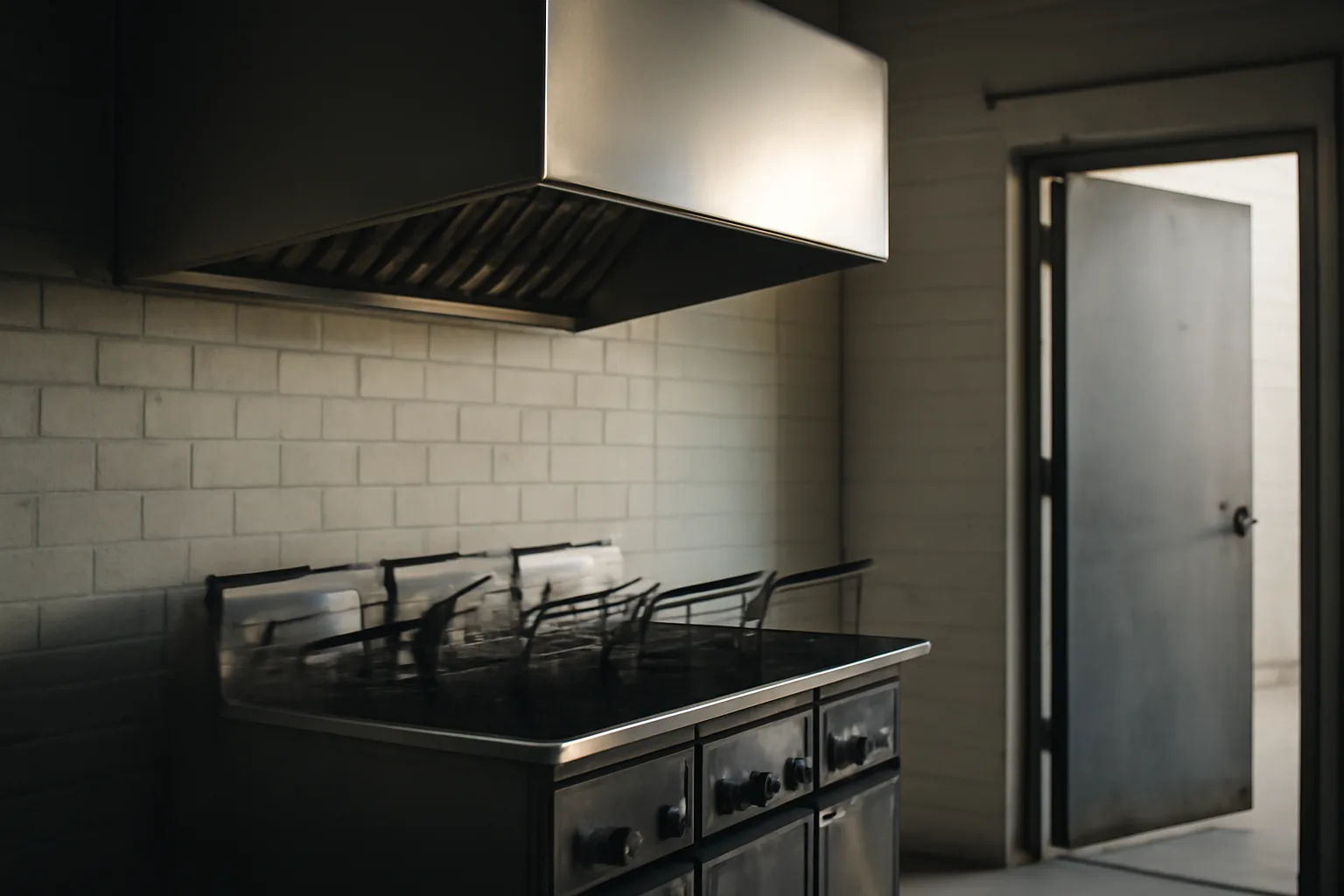
TL;DR
Delaware runs no kitchen hood Ansul board. Install, service, and inspection work goes through the Office of the State Fire Marshal, the local building and fire official, and a Division of Revenue business license. Factory training on the listed wet chemical system is a separate paper. Confirm current license classes and fees with those offices. Costs and review times are not one statewide number.
Is there a kitchen hood Ansul board in Delaware?
No. Delaware does not charter a kitchen hood Ansul board. Ansul is a manufacturer name for wet chemical restaurant systems, most often the R-102 line. The paper you actually file sits with the Office of the State Fire Marshal, the State Fire Prevention Commission that writes the fire rules, the county or city building and fire official, and, if the room serves food, the Division of Public Health.[1][2]
People type “board” because other states hang fire-protection contractors on a licensing board. Delaware is not built that way. Fire-protection company licensing and plan review run through the Fire Marshal. Electricians, by contrast, really do sit on a Title 24 professional board. That distinction matters. Treat kitchen hood Ansul Delaware work like an electrician card and you file the wrong packet.[1][3]
Walk away from anyone selling a “Delaware Ansul board application.” That form is not a state instrument. The Commission’s job is fire prevention rules. The statute gives it authority to write and change those rules so life and property are safer from fire and explosion. The Marshal enforces them and is the desk that licenses the firms doing suppression work.[1]
You still need training from the system manufacturer if you want to stay inside the listing. That certificate is not a state license. Mix those two papers up and you fail an inspection for a reason that feels petty and is not.
Why does Delaware even regulate kitchen hood systems?
Because cooking equipment starts most restaurant structure fires. NFPA’s report on eating and drinking establishments put cooking equipment in 61 percent of those structure fires. The same report estimated 7,410 such fires a year in the 2010 to 2014 window, 110 civilian injuries, and $165 million in direct property damage.[4]
That is the reason the hood, the filters, the plenum, and the wet chemical nozzles are not décor. A listed system is how the state and the local AHJ expect you to cut fuel, knock down a fryer fire, and keep the duct from carrying flame into the roof.
OSHA also treats a fixed extinguishing system as an employer duty, not a suggestion. The federal rule is the floor. Restaurant standards used in the field are tighter. You follow both.[6]
I would not open a fryer line in Delaware on a handshake and a used cylinder. The fire numbers are old enough that some operators shrug. The pattern has not flipped. Cooking still dominates this occupancy class.[4]
Do you need a license for kitchen hood Ansul in Delaware?
Yes, if you install, service, recharge, or inspect the suppression system as a business. You need the Fire Marshal company license for the fire-protection class that covers special-hazard or kitchen wet chemical work. Confirm the current class name and application at the Office of the State Fire Marshal. Categories get relabeled. Guessing the old name is how people mail the wrong check.[1][9]
You also need a Delaware business license from the Division of Revenue before you legally carry on that occupation. Title 30 is the tax-and-license statute, not a fire code. It still gates the work.[5][10]
You do not need a fictional Ansul board card. You do need manufacturer training to work on a listed system without voiding it. Local mechanical and fire permits for the hood and the job site are separate from the state company license. One card never covers all three.
Own the restaurant and hire a licensed firm to service the hood? Then you do not personally hold the suppression contractor license. You still have owner duties. OSHA says the employer shall keep a fixed system inspected and in operating condition. NFPA 17A adds a semi-annual professional service cycle for wet chemical restaurant systems. The stricter clock wins.[6][7]
Electrical interlock work (fuel shutoff, appliance shutdown, makeup air) is electrician territory. Delaware licenses electricians under Title 24, Chapter 14. A suppression tech who lands that wiring without the right electrical license is asking for a stop-work.[3][11]
How much does kitchen hood Ansul cost in Delaware?
There is no official Delaware price list for a kitchen hood Ansul job. Confirm every permit and plan-review fee with the county, the city, and the Fire Marshal. Those numbers move, and I will not invent them.
Hardware and labor for a single-hood wet chemical system commonly land from a few thousand dollars into the low tens of thousands. The spread comes from appliance count, pipe runs, gas valves, pulleys or electronic release, whether the hood itself is new, and whether you are ripping out a pre-UL 300 dry chemical unit. New Castle County commercial labor usually prices higher than a small Sussex job. Nobody publishes a clean statewide mean. Treat national contractor quotes as a band, not a bid.[12]
I would budget five separate lines. The listed suppression system. The hood and duct if they are new. Plan review and local permits. Two professional service visits a year. Hood cleaning on the NFPA 96 grease-load schedule. Anyone selling one lump “Ansul price” is burying the cleaning contract or the permit.
Waste of money: a consultant who “gets you on the board.” There is no board. Spend that fee on factory school and a complete OSFM license packet. Also a waste: cheapest no-name wet chemical the AHJ has never seen. You pay twice when plan review bounces it.
Insurance, if the Fire Marshal application asks for it, is a real line item. Read the current form. Do not take a blog’s dollar amount as the bond minimum.
How long does kitchen hood Ansul take in Delaware?
I will not invent a processing time. License review at the Fire Marshal and plan review at the Fire Marshal or the local building department move with their queues. Call both desks and ask what they are quoting this month. A Wilmington or busy New Castle corridor job waits longer than a quiet Kent fit-out. That is pattern, not a promise.
Physical install of a listed wet chemical system on an existing hood is often measured in days once parts and permits are in hand. New construction follows the building. You do not own the schedule if the hood welder or the gas fitter is late.
Acceptance testing happens when the AHJ says it happens. Some offices want to witness the dump test or a puff test and the fuel shutoff. Some accept a licensed firm’s report. Ask before you fill the tank. A surprise dump test is a messy afternoon.
First-year operations then lock to the semi-annual service clock in NFPA 17A and the hood-cleaning clock in NFPA 96. Those intervals are not optional just because the opening inspection already passed.[7][8]
If a salesperson guarantees a two-week Fire Marshal turnaround, they are guessing. Delaware offices do not publish a statutory kitchen-hood clock I can cite. Confirm with the reviewing office.
Which Delaware office actually stamps kitchen hood Ansul drawings?
The Office of the State Fire Marshal handles fire-protection plan review for suppression systems. That is the statewide desk most kitchen hood Ansul Delaware contractors actually ship drawings to. Local building and fire officials still permit the hood, the duct, the makeup air, and the occupancy. Food establishments also answer to the Division of Public Health under the Delaware Food Code.[2][9][13]
New Castle County, Kent County, Sussex County, and the City of Wilmington do not share one permit portal. You pull the mechanical or building permit where the hood sits. Do not mail New Castle plans to Georgetown and hope.
If you also work across state lines, the paper changes. The kitchen hood Ansul board in Connecticut is a different stack. So is the kitchen hood Ansul board in California. Delaware’s advantage is size. Fewer offices. The disadvantage runs the same way: one wrong desk and the file sits.
I file the suppression design, nozzle chart, appliance list, gas-valve cut sheets, and listing documents with the fire review first, then land the local mechanical permit. Doing it backwards is how people buy a hood they cannot legally pipe.
What paper do you keep in the first year of a Delaware hood job?
Keep a job file that an inspector can read without you in the room. Plans as approved. Cut sheets. The UL 300 listing for the system model. The manufacturer’s design or hydraulic layout. As-builts if the nozzle map moved. The acceptance-test report. Semi-annual service tags and tickets. Hood-cleaning reports. Owner monthly check logs. The firm’s OSFM license. The Delaware business license. The electrician’s ticket if they landed the interlock.[5][6][12]
| Paper | Who issues it | Why it stays in the folder |
|---|---|---|
| Approved suppression plans | Fire Marshal or local fire review | Proves the installed system matches the listing |
| Company fire-protection license | Office of the State Fire Marshal | Legal right to install or service |
| Business license | Division of Revenue | Title 30 occupancy of the trade |
| Semi-annual service record | Licensed firm | NFPA 17A maintenance clock |
| Hood cleaning ticket | Cleaning contractor | NFPA 96 grease-load clock |
| Electrical permit or license copy | Local AHJ / electrician | Interlock and shutoff work |
That table is the whole first year. Miss the cleaning tickets and the prettiest Ansul install still fails a health or fire walk-through.
If you want a blank checklist of what most AHJs ask for on a first-year hood route, AnsulPath sells a $199 one-time AHJ and Semi-Annual Route Kit at /start. You can build the same file yourself from the Fire Marshal application and the county permit list. I would not pay more than that for a folder of templates.
Store copies off site. Restaurants lose binders in the office closet. The inspector will not care.
Does factory Ansul training replace a Delaware license?
No. Manufacturer school keeps you inside the listing. The Fire Marshal license lets the company offer the trade in Delaware. You need both if you are the firm doing the work. A wallet card from a three-day R-102 class does not satisfy Title 30 or the Fire Marshal.[1][5][7]
The reverse is also true. A state company license does not let you mix Brand A nozzles onto a Brand B manifold. That voids the listing. UL 300 is a fire-test standard for restaurant systems facing modern fryer and range energy. After that standard landed in the 1990s, old dry chemical restaurant setups fell out of favor with AHJs. If a Delaware kitchen still has one, plan on replacement when appliances change. Confirm the local official’s stance before you reuse pipe.[12]
I would send techs to the school for the exact model you sell. Not a generic “wet chemical” weekend. Listing reports get picky about detection, nozzle placement, and the gas valve.
Other states phrase this split differently. Compare the kitchen hood Ansul board in Florida or the kitchen hood Ansul board in Illinois if you keep a multi-state crew. Do not copy their forms into a Dover job.
How often must a Delaware kitchen hood Ansul system be inspected?
Plan on professional inspection and maintenance at least twice a year under NFPA 17A for wet chemical restaurant systems. Plan on more frequent hood and duct cleaning under NFPA 96, set by grease load. OSHA still requires at least an annual inspection of fixed extinguishing systems by a knowledgeable person. The restaurant clock is the semi-annual one.[6][7][8]
OSHA’s rule is blunt. It says: “The employer shall assure that fixed extinguishing systems, other than sprinkler systems, are inspected annually by a person knowledgeable in the design and function of the system to assure that the system is maintained in good operating condition.”[6]
That is the federal floor, not the restaurant finish line.
NFPA 96 sets cleaning frequency by how hard the cooking is. Solid fuel runs monthly. High-volume charbroil and 24-hour lines run more often than a church supper hall. I use the current NFPA 96 table in the edition the AHJ names. I do not memorize an old table number and argue with an inspector.[8]
Owner or staff should still do the simple monthly look. Gauges in range. Nozzles aiming where they should. Manual pull clear. Filters in place. That log is cheap. Skipping it is how a failed fusible link becomes a closed dining room.
Tags on the tank and a copy in the office. If the only record is a faded sticker, you lose the argument.
Do New Castle, Kent, and Sussex handle kitchen hood Ansul the same way?
The state Fire Marshal piece is the shared layer. The local permit is not. New Castle County is the dense commercial end. Kent includes Dover. Sussex is the beach and poultry corridor. Wilmington runs its own licenses and inspections shop. Pull the hood permit where the building sits.[2][9]
Expect tighter plan comments and more witness tests in the northern county. Expect longer drives and leaner inspection staff downstate. Neither is “easier.” They fail different things. New Castle catches listing mismatches. A small-town job fails because nobody called for the final.
Health licensing follows the food operation, not the county line, through the Delaware Food Code. A resort kitchen in Sussex still needs a hood that actually captures grease. The Food Code’s adequacy language is short on purpose.[13][14]
If you keep a regional book, skim how Georgia and Arizona split state fire marshal work from city permits. The lesson travels. The forms do not.
I would not advertise “statewide pricing, same week.” Sussex in July and New Castle in a plan-review backlog are different businesses.
How does the Delaware Food Code treat the hood?
As equipment that has to work, not as a fire-only object. 16 DE Admin. Code 4458 is the Delaware Food Code. It tracks the FDA Food Code on ventilation hood systems. The FDA text is the line inspectors still recite: “Ventilation hood systems and devices shall be sufficient in number and capacity to prevent grease or condensation from collecting on walls and ceilings.”[13][14]
Capture and cleanability get you in trouble as fast as a low gauge. A perfectly charged wet chemical system over a hood that smears grease on the tile is still a health fail.
Coordinate the fire review and the food-facility review. I have seen operators pass Fire Marshal acceptance and then lose the health opening because drip trays and filter fit were sloppy. That is a dumb week.
The Food Code does not replace NFPA 96. It stacks on it. Clean to the grease-load schedule, keep the suppression nozzles clear of the cleaner’s wand, and put both tickets in the same binder.[8][13]
What would I actually do to start kitchen hood Ansul work in Delaware?
First I would call the Office of the State Fire Marshal licensing desk and ask for the current fire-protection company application, insurance list, and class names. I would not download a 2019 PDF from a forum. Then I would pull the Division of Revenue business license for the occupation I am actually in.[5][9][10]
Next I would pick one listed system and go to that school. I would hire or subcontract a Delaware licensed electrician instead of “just landing the microswitch.” I would read 16 DE Admin. Code 701 and Title 16, Chapter 66 so I know who enforces what.[1][2][3]
Then I would price a small existing-hood retrofit and a new-construction hood as two different products. I would put semi-annual service in the first proposal so the owner is not shocked in month six.
I would not buy a lead list of “Delaware restaurants that need Ansul.” Every fryer line already has a service company or a problem. Door-knocking with a real license and a clean listing beats that list.
For a multi-state binder, keep Delaware forms away from the Alabama and Colorado packets. Shared folders create wrong stamps.
AnsulPath is an independent publisher, not a law firm and not a service company. If you want the blank AHJ folder we already mentioned, it is at /start. Confirm every fee and queue with the Marshal and the county. Nobody here can stamp your drawings.
Frequently asked questions
Do you need a license for kitchen hood Ansul in Delaware?
Yes, if your company installs, services, or inspects the suppression system. Get the Office of the State Fire Marshal fire-protection company license for the current kitchen or special-hazard class, plus a Division of Revenue business license. Factory Ansul training does not replace those. Restaurant owners who only hire a licensed firm do not hold the contractor license, but they still owe OSHA and NFPA inspection duties.
How much does kitchen hood Ansul cost in Delaware?
There is no state price. A single-hood wet chemical system often runs from a few thousand dollars to the low tens of thousands, before a new hood, permits, and cleaning. Confirm plan-review and permit fees with the Fire Marshal and the local AHJ. I would not trust a single lump quote. Split system, hood, permits, semi-annual service, and NFPA 96 cleaning into separate lines.
How long does kitchen hood Ansul take in Delaware?
Install on an existing hood is often days after parts and permits arrive. License and plan review follow the Fire Marshal and local building queues. Those offices do not publish a statutory kitchen-hood clock I can cite. Ask both desks for the current wait. New construction follows the building. Acceptance testing is scheduled with the AHJ, not the salesperson.
Is Ansul required, or can a Delaware kitchen use another brand?
Ansul is a brand, not a Delaware statute. The AHJ wants a listed wet chemical system that matches the appliances and passes plan review, usually a UL 300 restaurant system. Other listed brands can be fine if the official accepts the listing and the installer is trained on that model. Do not mix parts across brands. That voids the listing.
How often must a Delaware kitchen hood fire system be serviced?
NFPA 17A puts professional inspection and maintenance of wet chemical restaurant systems on a semi-annual cycle. OSHA requires at least an annual inspection of fixed extinguishing systems by a knowledgeable person. Follow the tighter restaurant interval. Hood and duct cleaning follows NFPA 96 by grease load, which can be monthly on hard cooking. Keep tags and tickets.
Does the restaurant owner need the Fire Marshal license?
Not if a licensed fire-protection firm does the install and service. The owner still must keep the system in service, allow inspections, and keep records. OSHA puts that duty on the employer. If the owner’s staff starts swapping cylinders or aiming nozzles, they have stepped into licensed work. Hire the firm. Keep the folder.
Do I need a Delaware licensed electrician on a hood Ansul job?
Usually yes for the interlock. Fuel shutoff, appliance shutdown, and makeup-air ties are electrical work. Delaware licenses electricians under Title 24, Chapter 14. Confirm with the local electrical inspector whether your specific hookup needs a permitted electrician. I would not let a suppression-only tech land line-voltage work to save a day.
What is UL 300 and does Delaware care?
UL 300 is the fire-test standard used for modern commercial cooking extinguishing systems. AHJs treat it as the listing you show in plan review. Pre-UL 300 dry chemical restaurant systems are a problem when you change fryers or remodel. Confirm replacement with the local fire official. Do not reuse old dry chemical pipe on a new high-efficiency fryer line.
Can I service Delaware systems with only factory training?
Factory training keeps the listing valid. It is not the state company license and not a business license. If you take money to service systems without the Fire Marshal credential your class requires, you are exposed. If you hold the state license but skip the school, the manufacturer and the AHJ can still reject the work. Get both.
Is the paper different in New Castle County versus Sussex County?
The Fire Marshal company license is statewide. The hood permit, occupancy, and who witnesses the test follow the county or city. Wilmington is its own inspections shop. Health licensing follows the food operation under the Delaware Food Code. Call the building department that owns the address. Do not assume Georgetown accepts a New Castle stamp.
What happens if the kitchen hood system is out of service?
Cooking that depends on that protection should stop. A closed or impaired system is a fire-code and insurance problem, and health inspectors will not love a fryer under dead nozzles. Call the licensed firm, tag the impairment, and follow the AHJ’s impairment rules. Do not run “just lunch” on a disconnected pull station.
Do Delaware food trucks follow the same hood Ansul rules?
Not automatically. Mobile units can fall under different fire and health reviews than a brick-and-mortar hood. Some setups use listed compact systems. Some events want an extinguisher and no fryer. Confirm with the State Fire Marshal and the health licensing desk for the exact vehicle and menu. Do not copy a restaurant drawing onto a truck.
Where do I confirm current OSFM license fees for this work?
With the Office of the State Fire Marshal licensing desk and the current application, not with a dated blog. Fees and class names change. The Division of Revenue publishes the business-license side under Title 30. I will not quote a dollar figure I cannot see on today’s form. Call both offices before you write a check.
Sources
- Delaware Code, Title 16, Chapter 66, Fire Prevention: Delaware law places fire prevention rulemaking and Fire Marshal authority in Title 16, Chapter 66, not in a kitchen-hood Ansul board.
- 16 DE Admin. Code 701, Delaware State Fire Prevention Commission: The State Fire Prevention Commission’s administration regulation is the state rule set the Fire Marshal enforces on fire-protection work.
- Delaware Code, Title 24, Chapter 14, Board of Electrical Examiners: Electricians are licensed under a Title 24 professional board, which is the correct license path for hood interlock wiring.
- NFPA, Structure Fires in Eating and Drinking Establishments: NFPA found cooking equipment involved in 61 percent of eating and drinking establishment structure fires, with an estimated 7,410 fires a year, 110 civilian injuries, and $165 million in direct property damage in the 2010 to 2014 window.
- Delaware Code, Title 30, Chapter 21, general provisions on occupational and business licenses: Delaware requires a Division of Revenue license before a person carries on an occupation covered by Title 30.
- OSHA, 29 CFR 1910.160 Fixed extinguishing systems: Employers must assure fixed extinguishing systems other than sprinklers are inspected annually by a person knowledgeable in the system’s design and function.
- NFPA 17A, Standard for Wet Chemical Extinguishing Systems: NFPA 17A is the installation and maintenance standard used for restaurant wet chemical systems, including the semi-annual professional service cycle.
- NFPA 96, Standard for Ventilation Control and Fire Protection of Commercial Cooking Operations: NFPA 96 is the standard that governs commercial cooking hoods, ducts, and cleaning frequency by grease load.
- Delaware Office of the State Fire Marshal, Plan Review: The Office of the State Fire Marshal runs fire-protection plan review for systems submitted in Delaware.
- Delaware Division of Revenue, Business License: The Delaware Division of Revenue issues the business license required to carry on an occupation in the state.
- Delaware Division of Professional Regulation, Board of Electrical Examiners new license: Delaware’s electrical license applications run through the Division of Professional Regulation Board of Electrical Examiners.
- UL 300, Fire Testing of Fire Extinguishing Systems for Protection of Commercial Cooking Equipment: UL 300 is the fire-test standard for extinguishing systems that protect commercial cooking equipment, and AHJs treat it as the listing shown at plan review.
- 16 DE Admin. Code 4458, Delaware Food Code: Delaware adopts its food establishment rules, including ventilation hood expectations, as 16 DE Admin. Code 4458.
- U.S. FDA, Food Code 2022: The FDA Food Code states ventilation hood systems shall be sufficient in number and capacity to prevent grease or condensation from collecting on walls and ceilings.